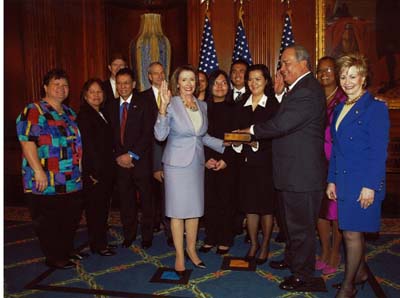
 Back when I was shooting The Insular Empire, Pete A. Tenorio was trying desperately to get the CNMI a non-voting delegate to Congress. That, he claimed, would make all the difference. And in a way he was right: at the time, the best he could do as a ‘Resident Representative to the United States’ was to lobby the Department of the Interior on behalf of his people.
Today, the CNMI finally has a non-voting representative. (Although not, I might add, because the esteemed members of Congress paid any attention to Pete’s persistent lobbying. The right to a non-voting delegate instead came as an addendum – a kind of generous afterthought – to a bill federalizing the CNMI’s wage and immigration laws, which was crafted and passed without any consultation from the CNMI.) But what good is a seat in Congress if it doesn’t come with a vote?
I have long argued that the Insular Areas’ representation in Congress is second-class. It allows them only to vote in committee, but not on the house floor. It gives them none of the real bargaining power that is at the heart of Congressional politics. And I’m pleased to see that s
omeone in the CNMI is finally making some noise about this. Radio New Zealand published this story two days ago (it was then re-posted by the Overseas Territories Revew), about the CNMI Senate leader’s comments to the same effect. The non-voting delegates’ participation, he points out, “is purely ceremonial, because they don’t have to listen to us.” (Read the entire article here.)